
beginning & the end
reflections on a partial and improvisational return

[[lately, every time i touch the keyboard i feel overwhelmed with tears.
alarming. difficult. some days, i think this is because i’ve lost the faith. certainly, in recent years, i have felt exhausted, disgusted, and hopeless in turns when it comes to the facility of words. but when i come to my desk lately and feel the well behind my eyes, i recognize these are the tears of devotion. surrender. because, however important and legitimate my critiques of language, they do not supersede this fundamental inclination of my soul. writing is more than a passion; it is how i exist. and so i stretch myself back across the paradox, accepting the discomfort of contradictory truths—writing is “not enough” in a world of steel and blood, and it is something i came here to do.
so: an acceptance, gratitude shaded with dread. surrender to opening, to currenting time, spirit, world. yes, yes. i will presence. yes, i will listen. i will try. ]]
. . .
begin. again. after. last.
the words in me are all edges, lately.
as a Palestinian, i have felt worlds die in me, witnessed their end on screen after screen. i think many of us feel it—how the erasure of all red lines, witnessed in real time, was both unprecedented and familiar. murdered: all doubt that we live, have lived, in an age of human disposability. all of us are desecrated. innocence is dead.
today—even as genocide rages on in Palestine, Sudan, and beyond, and faltering empire escalates its overweening violence on every continent—we are nevertheless laden with the many, irremediable endings we have seen. we exist in an “after” that is is full of ongoingness—both ongoing, unfinished disasters and the marvel of continued life.
Where should we go after the last frontiers?
Where should the birds fly after the last sky?
Where should the plants sleep after the last breath of air?
Darwish asked this decades ago. this, and sentiments like it, are what instruct me—the admission that we have suffered unbearable defeats, irreparable loss, and yet we exist beyond, will exist beyond, the last frontier. exquisite and painful, paradox and miracle. a stone thrown against impossibility—this, the lifeway, the hot red drum, my kin have given me. a stone. thrown. the sharp cut of chipped earth, gravity defied, a lip broken and raised anyway.
contradiction: the unholdable center, the unsutured wounds that rift—that define—modernity.
. . .
for a while, i got stuck on the lastness of this frontier. i faltered, suddenly overcome by my inability to imagine a horizon beyond this one, its closing dark. forgetting that eschatology is a dangerous game. only fascists and tyrants claim complete command over the final ending.
i recall: liberation is equal parts theory and praxis. that is, it’s a way of faith.
. . .
impossible. desires.
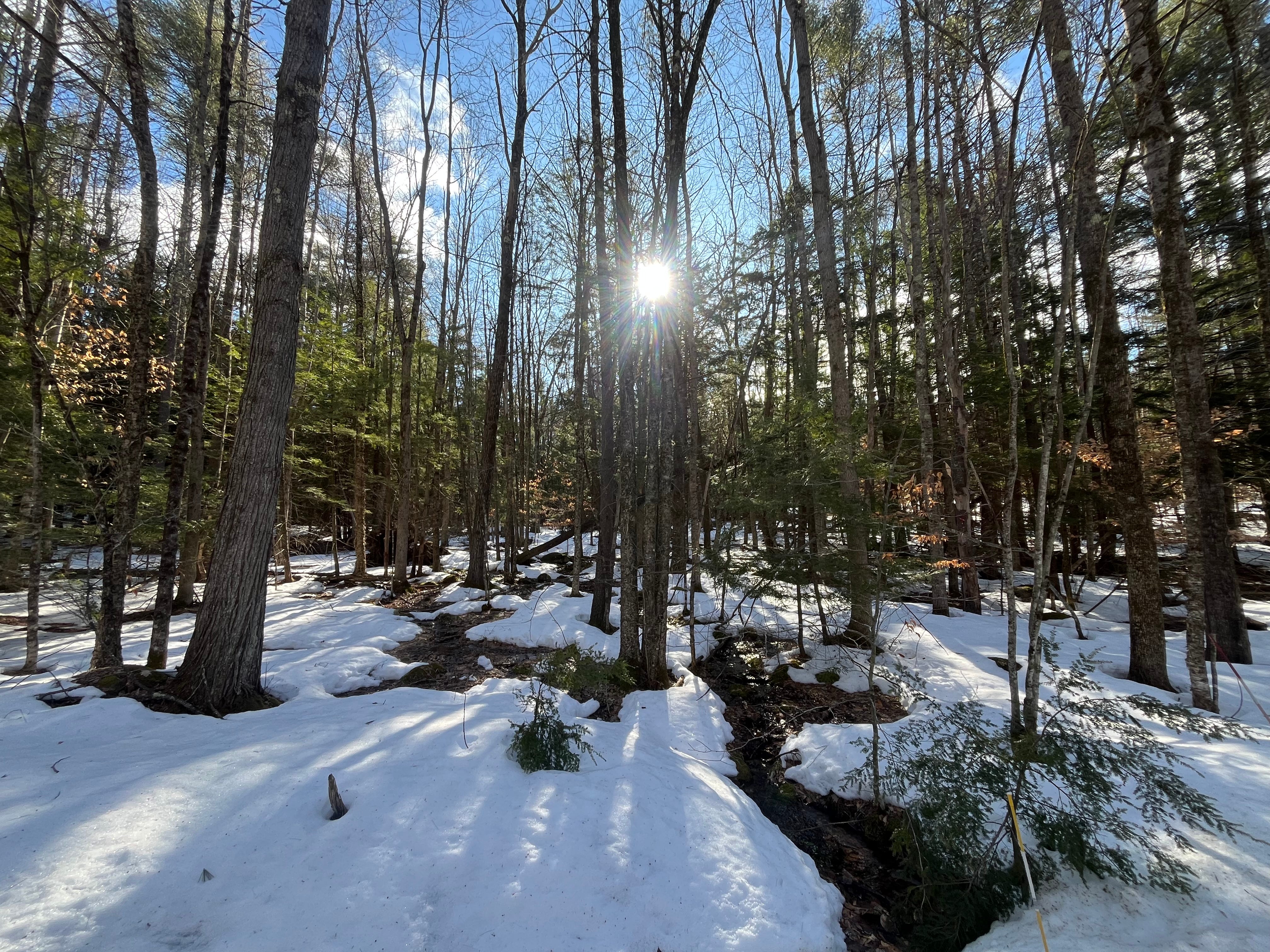
recently, i spent a month in the woods.
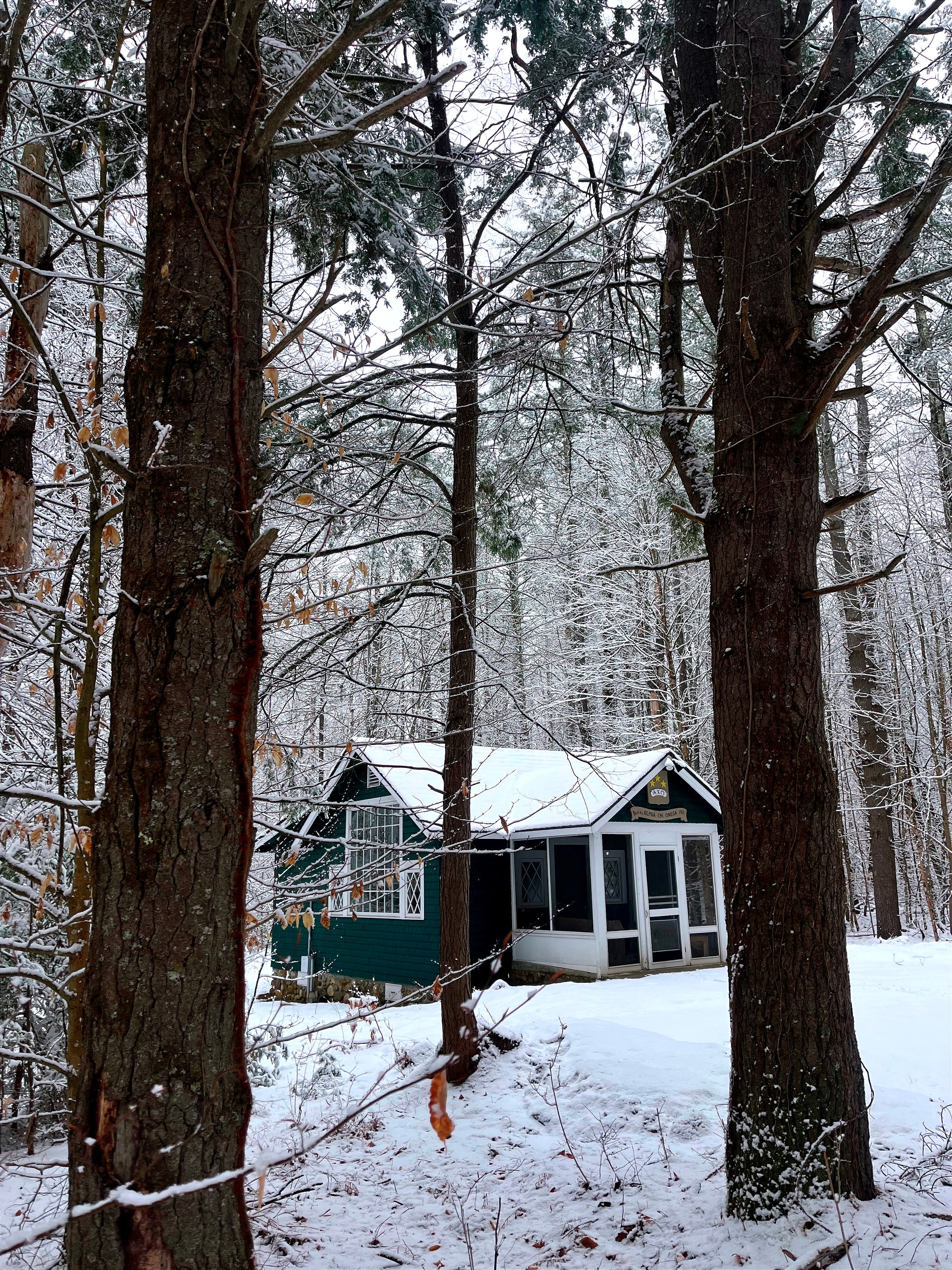
i arrived to my cabin on a bright, frigid morning with an underpacked suitcase and too many books. my chest a heap, my limbs vapor, i teetered with the weight of unprocessed horror accrued over the last twenty-seven months. ostensibly, i was attending a prestigious artists’ residency, but i went with low expectations for output—my burnout so profound by then, useful writing seemed unlikely. instead, i hoped for a little rest, and perhaps to sift through the debris my mind had become.
“what are you working on?” everyone asked me, asked each other, on the first day, and every day.
“grief” i replied, offering only the slightest smile—a trace acknowledgement that yes, i know that is quite an answer to drop in a stranger’s lap. (hey, you asked.) depending on their look or my mood, i would expound a little—telling them of the hundreds of dead i carried. how my writing, my living itself, felt pinned beneath this weight. how i would search for a ritual to teach me, remind me, how to move.
mostly, i was met with winces—the scant “i’m sorry”s were uttered softly, as eyes quickly dropped. i know that reflexive stiffness, the one which so often seizes non-Palestinians when confronted with one of us. as if others are preemptively embarrassed by what might come next—our possible sorrow or rage?—or intuitively ashamed, as our bodies invoke the contradiction we all share as living among the dead.
(often, my interlocutor betrays a flash of nervousness, too—as if our brief, private conversation is being surveilled. it’s not an outlandish thought, but it is exhausting to be made to feel like a liability rather than a [grieving] person, let alone the person who stands to actually be incriminated by any words we might exchange).
anyway. i didn’t answer “grief” for their benefit nor to extract their sympathy. rather, it was my own need to hold myself to this simple assignment, an attempt at integrity.
and so. i refused to amend or ease this answer. my work was grief.
. . .
there were many opportunities to be sidetracked, diverted. dangerously tempting, the reflex to join the ethos of urgency. all of us knew we were being afforded a rare opportunity—the promise of space, shelter, food, and, by virtue of these provisions, the rarest asset of all: time. some of us were there for two weeks, and some for six or eight. but everyone seemed to feel a great pressure to emerge from this time with something “to show for it.”
how much i recognized, and usually share, this instinct. of course, of course. life is pitiless toward the creative. the number of intrusions, interruptions, and impediments toward art-making can seem bottomless. not to mention the distances we travelled—literally, and in the lengths necessary to hit “pause” on our lives back home. most of us had left loved ones behind to parent or housekeep without our help, and we’d all miss some parties, some number of community events and/or crises—not to mention the financial burden of taking time away from work.
all for what? secretly or openly, each of us wanted the answer to descend upon us in the form of some brilliant piece of art or breakthrough. we wanted to be worthy. we wanted results.
on some days i did cave to the urge to produce. i sat at my gorgeous writing desk and tried prove i deserved it. i tried to type words. but the language came flat, warped by the weight of unreconciled anger. the pounding in my ears, a roar which was inchoate and which i understood all the same:
is this it? language? after the death of everything?
it felt important to be honest. and it felt disgusting to use words.
. . .
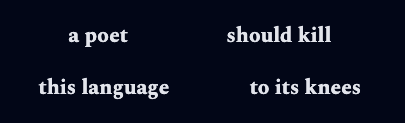
i wrote these shards one day, in a blink. a call that made sense to me, but which i did not yet know how to fulfill—what kind of injured, surviving language was worthy, appropriate, in this haunted epoch? over the years, i have experimented in many ways with bending and breaking and remaking language, aiming to thwart or at least diagnosing the power structures, the silences and killing, within. (for more, well, i’ve done maybe too many interviews about this in the context of the Hollow Half, which you can find).
but the urgency and stakes and world had changed—not to mention me. the language of the past would not suffice. these tools, this way back into language, needed to be discovered, forged anew.
i stared at the white pixels on my screen, the lined pages of my notebook. waiting. listening for something new. desiring and doubting it.
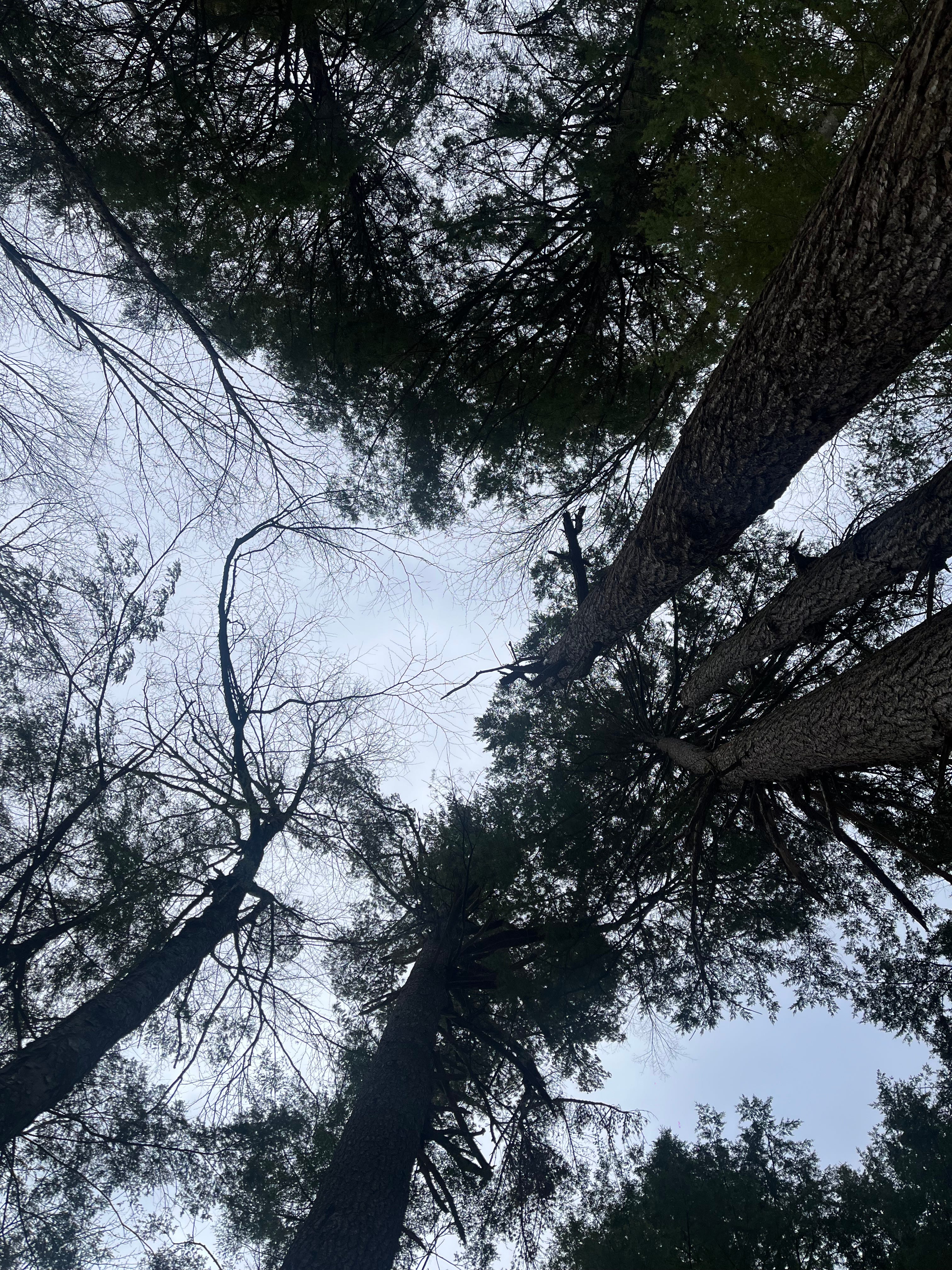
but my body, as usual, had a wisdom that surpassed my verbal grasp. it stirred. it bade me to look up, through the massive windows that framed me, that portalled outward, to the snowy silent woods. something in me flexed, released. a craving setting in. the quiet air shaped itself, entered me, like a call.
i stood up and moved outside.
and so my new routine began.
hiking, dancing, thrashing, laying, listening. i did whatever my limbs felt meant to do, but i did it outdoors. rain or shine for hours every day. first obedient, then in love. magnetized and awed. the simplest of hours, but my soul was deep at work.
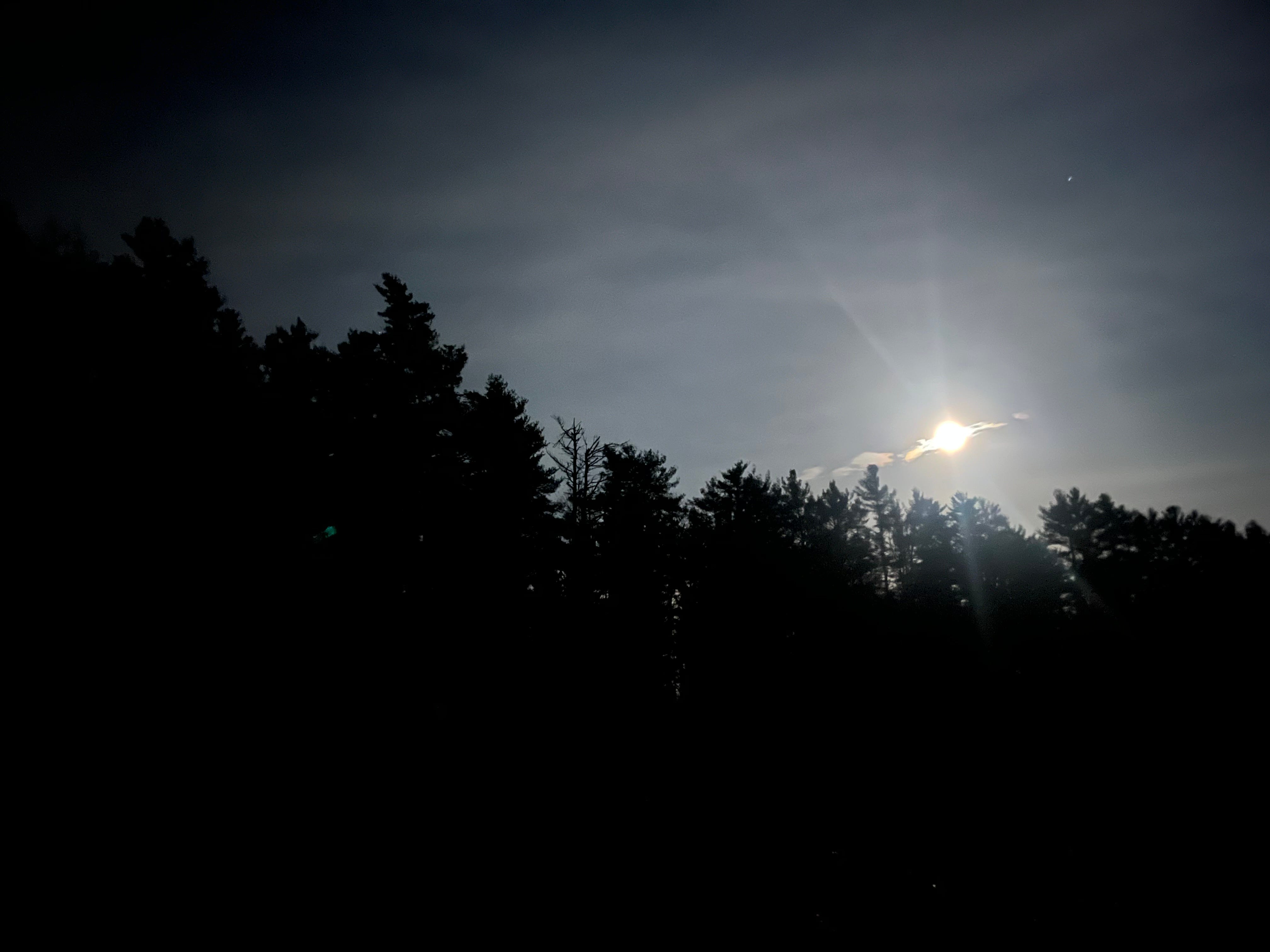
what happened out there, in the coming days and weeks, is a privacy i will preserve for now. but i will say: this was a new kind of embodiment. not a domestic practice of self-care, but something like derangement. a return to creaturehood. an important loosening, rendering tenuous all those inherited disciplines, those narrow ideas of “rational,” “grown up,” and “work.”
this, the condition that permits alchemy. for me, this new permeability allowed me to learn things like: there are spirits, keepers of places, and their generosity and our attention can allow a kind of touch. and: the mountains are strong and unwincing. and: there is a way that winter air can become blood-warm. a way the sky will gaze into the corners of you with equanimity, baptizing you clean.
and: some qualities of aliveness—animal, mineral, tree—are so ancient and unkillable they will refute the death in you.
it comes like a memory. the majesty of this earth-mind. the fragile bleak dream of humankind. and to which one i belong.
. . .
none of this is solace. none of this negates the ongoing, unforgivable atrocities. no endings are undone no misery reversed. what happened to me, what is happening to me, is simply: a pulse. the earth lent me theirs until i remembered (learned it was) my own. as my veins returned, other members, memories, emerged. my own feet—two and only two. soggy in my wet shoes. the thawing creek, the bark under my hand, the morning—that morning, fast becoming afternoon.
i was brought narrow, that is home, again—my small and irreducible clot of space and time. i had become so scattered—diffuse with shock, and with my erratic, trauma-addled attempts to both evade and grasp too much at once. but i have learned this lesson before: to write or live with meaning, one has to know one’s place. each beginning is a return. to the act of attention. the commitment of presence, of inhabiting, and knowing where and with whom.
. . .
come to this shore, small and distracted daughter, and remember what you knew. finite in this body, precious in its limits, its entanglements and lineage. this is not to abandon the horizon. but every horizon is contingent on, contiguous with, where we stand.
(touch these days to that life)
. . .
post script.
i named this newsletter traces/[سجل] like i name most things—impulsively, intuitively. i had in mind the multiple valences of the word trace, which can mean something preliminary, as in a sketch, or something more like practice, an imitation. trace can also mean remnants, the residue left behind from a different presence or time. it’s also a lesser-used translation of the Arabic [سجل] which means more literally to record, transcribe, put down. i had in mind to create a space of loose record-keeping, a space for practice, for improvisational and collaborative play. i hope some of what i share gets read and makes meaning for someone. i hope it introduces me to others, from whom i learn. also will be using it as a space to think about another type of trace, which has been a preoccupation for a while—
the traces, or ruins, of destroyed structures—this is the origin point of all Arabic poetry and poetics. our literary lineage, and thus our language, began right there— “standing on the ruins,” stopping to lament the traces of a gone time and place. for months, i have dwelt in this. it is praxis, poetics, and politic—to hold open the rupture of history, to presence the dead. a haunting and honoring. wherever we go, where we’ve been remains. a part of us, of everything.
but, also—this is not where the poet ends. every poem which begins on the ruins eventually moves, journeys into the landscape beyond the ruins. and then, every new beginning returns to lament. cycle, momentum. repetition. anew.
i have many more thoughts which i will share here or elsewhere in coming months. but for now, i am committing myself to a regular practice of sharing here. because i do want to experiment, trace, try out, a different balance in the dance of lament and living, lament as living, living with the dead. it will be a braid of personal reflections, thoughts on craft, upcoming events, and glimpses into what i am reading and thinking with (looking forward to this part perhaps the most).
i will not place too much emphasis on subscriptions for now, as i’m just starting out, and i know times are tough financially. however, any support would be welcome—i am experimenting, too, in what channels might sustain me and my wee family materially. . .
in the meantime, thank you for being here.
It’s a beautiful place in winter, and I’m glad you found a daily practice there that put you in touch with the snow and woods and trees
What beautiful meditation of walking through exhaustion and dropping into spaces of grief: of wanting to connect, ground and explore what lays beneath politic, artifice, body, bone.
—Steel and blood are often forgotten, stories live on.
Thanks for sharing!